 Visual Paradigm Desktop |
  Visual Paradigm Online
The Free Agile Retrospective Planner isn’t just for documenting meetings. It’s a dynamic tool designed to integrate seamlessly into your team’s real-world activities, turning every event into an opportunity for growth.

SCENARIO
The Classic End-of-Sprint Retro
Your sprint just ended. The team is tired but also accomplished. How do you move beyond a routine “what went well?” discussion?
Before the Meeting: Use the Prepare step to link directly to your burndown chart and sprint goal metrics. This sets a data-driven tone from the start.
During the Meeting: Use the Conduct step to plan an engaging activity like the “Starfish” retro (Keep, More, Less, Start, Stop) to generate specific, forward-looking feedback.
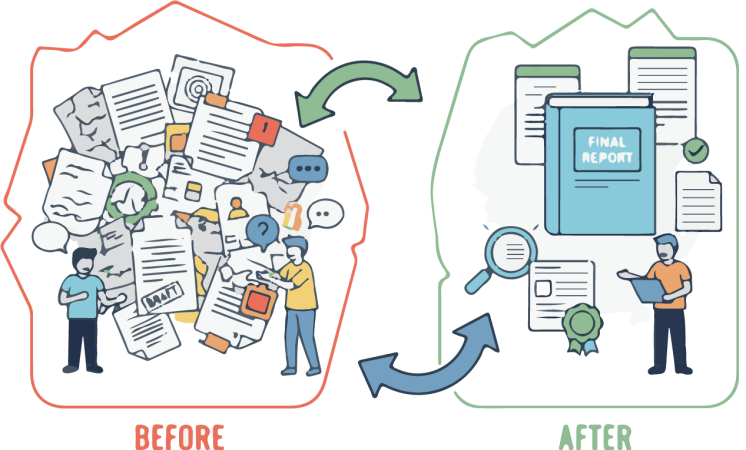
After the Meeting: The Final Report captures not just the ideas, but the context of the sprint, creating a valuable historical record for future planning.
SCENARIO
Tackling a Persistent Problem
That one type of bug keeps slipping into production, or the team is always blocked by the same dependency. How do you break the cycle?
A Dedicated Session: Plan a special-purpose retrospective focused solely on this issue. Use the Conduct step to structure a “5 Whys” or “Fishbone” root cause analysis.
Create a Robust Plan: Use the Implement & Monitor step to create a detailed task plan with specific owners, success metrics, and a governance process for checking in on progress.
Ensure Follow-Through: The free planner ensures these action items don’t get lost. The next retrospective can begin by reviewing the progress on this specific plan.
SCENARIO
The Post-Launch or Post-Incident Debrief
You’ve just had a major release, a successful marketing campaign, or a critical system incident. How do you capture the lessons learned while they’re still fresh?
Structure the Chaos: Use the free planner to structure a blameless post-mortem. The guided steps ensure you cover what happened, the impact, and what can be done to prevent or replicate it.
Communicate with Stakeholders: The Final Report becomes a clean, professional document you can share with leadership, demonstrating a mature process for learning.
Build an Organizational Knowledge Base: These reports create a library of organizational knowledge, helping future teams learn from past successes and failures.
Stop running retros on autopilot. Start building a culture of continuous improvement with a tool designed to help you succeed.
