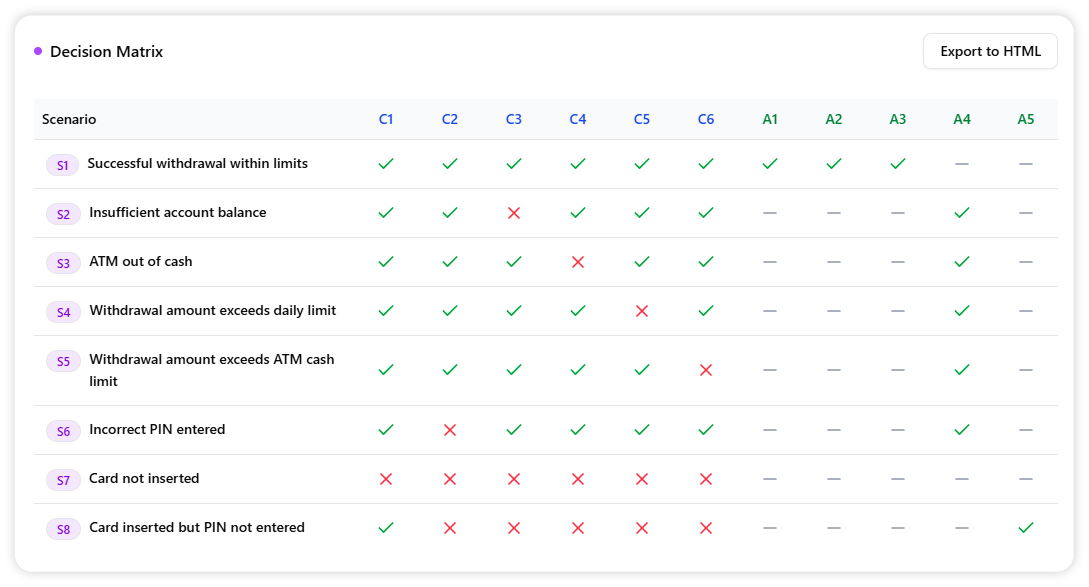
Provide the Use Case Description First, we feed the AI a detailed use case description. For the best results, include preconditions, main flows, and alternative flows. This rich context helps the AI...
Provide the Use Case Description First, we feed the AI a detailed use case description. For the best results, include preconditions, main flows, and alternative flows. This rich context helps the AI...
This use case focuses on security and access control across multiple profiles. Scenarios include setting up a PIN, restricting content by rating, a child attempting to access blocked content. Provide...
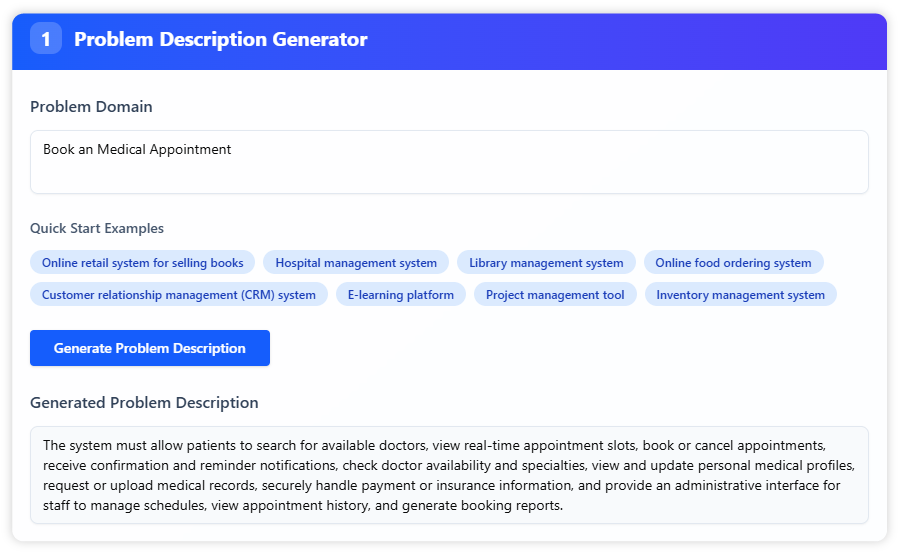
Availability is key. Scenarios include the doctor having open slots, the patient’s insurance being accepted, booking a new patient vs. a follow-up appointment, and the need for a referral...
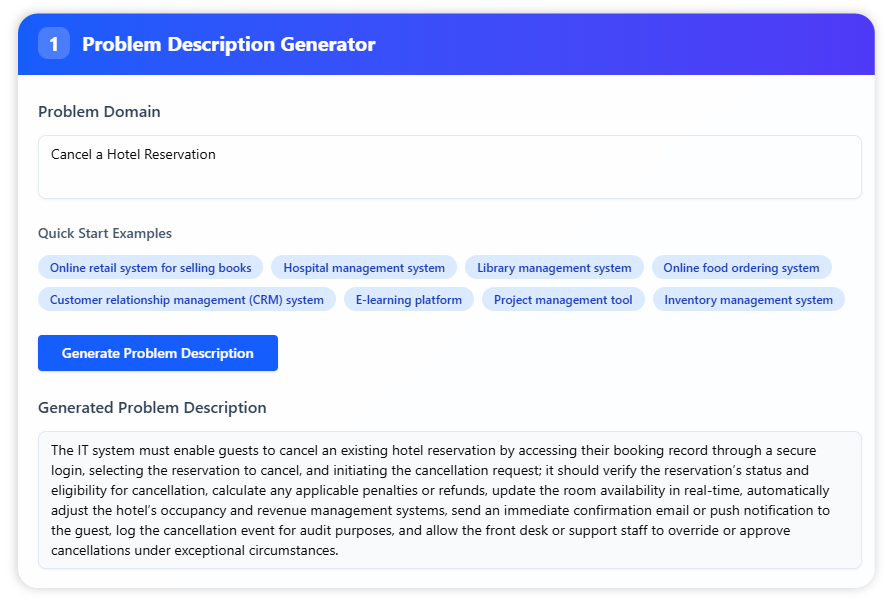
Cancellation policies create many scenarios: cancellation within the free-cancellation window (full refund), cancellation outside the window (fee charged), non-refundable bookings, and cancellations...
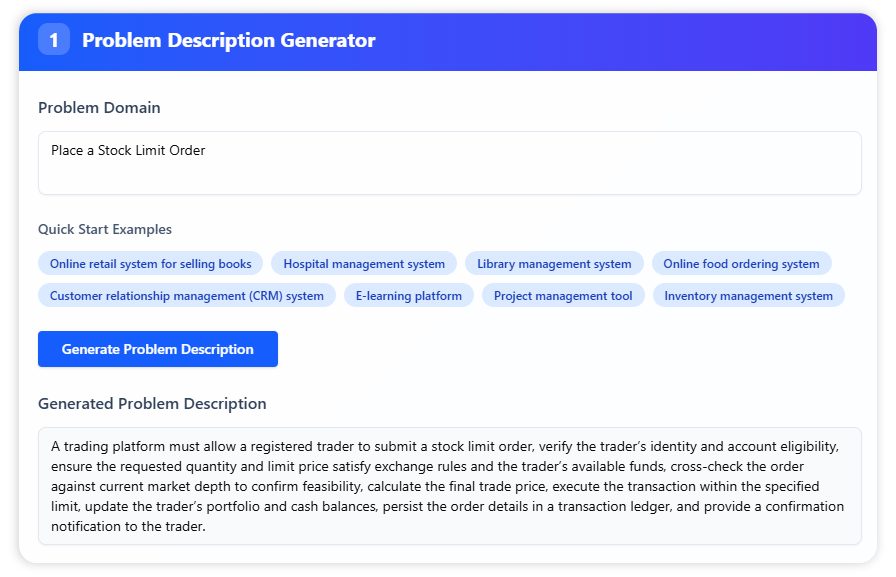
This use case depends on external market conditions. Key scenarios include the limit price being met, the order expiring, and having insufficient settled cash to cover the trade. Provide the Use Case...
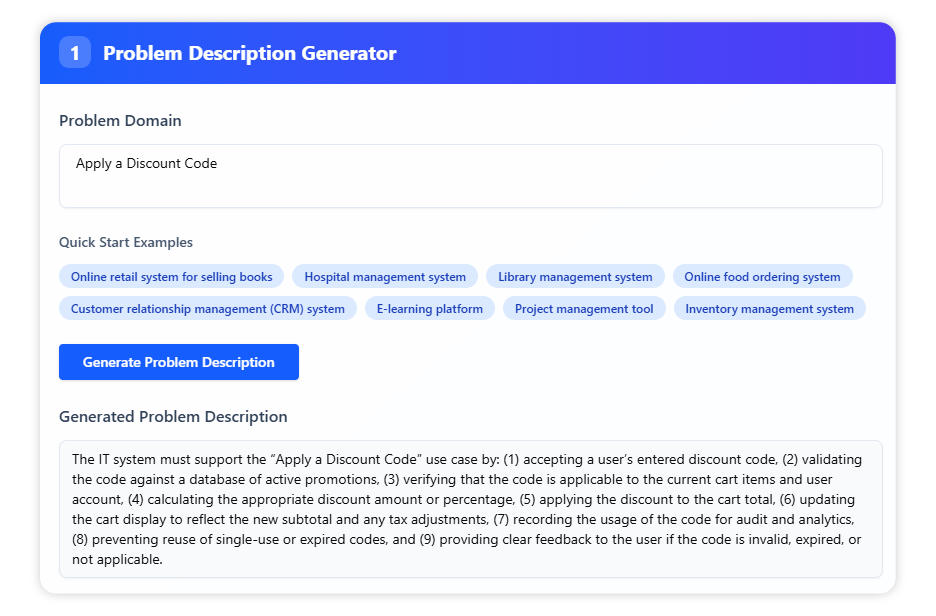
This seemingly simple action has numerous conditions: Is the code valid? Has it expired? Is it applicable to the items in the cart? Has it already been used by the customer? Is it combinable with...
If preconditions are the rules for starting a use case, then postconditions are the results when it’s all over. A postcondition is a specific, observable change that occurs after a use case has...
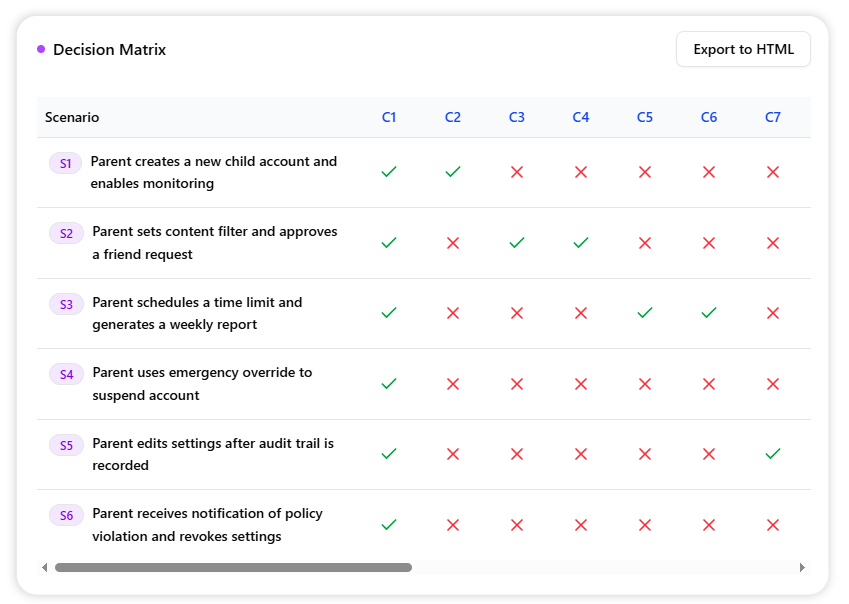
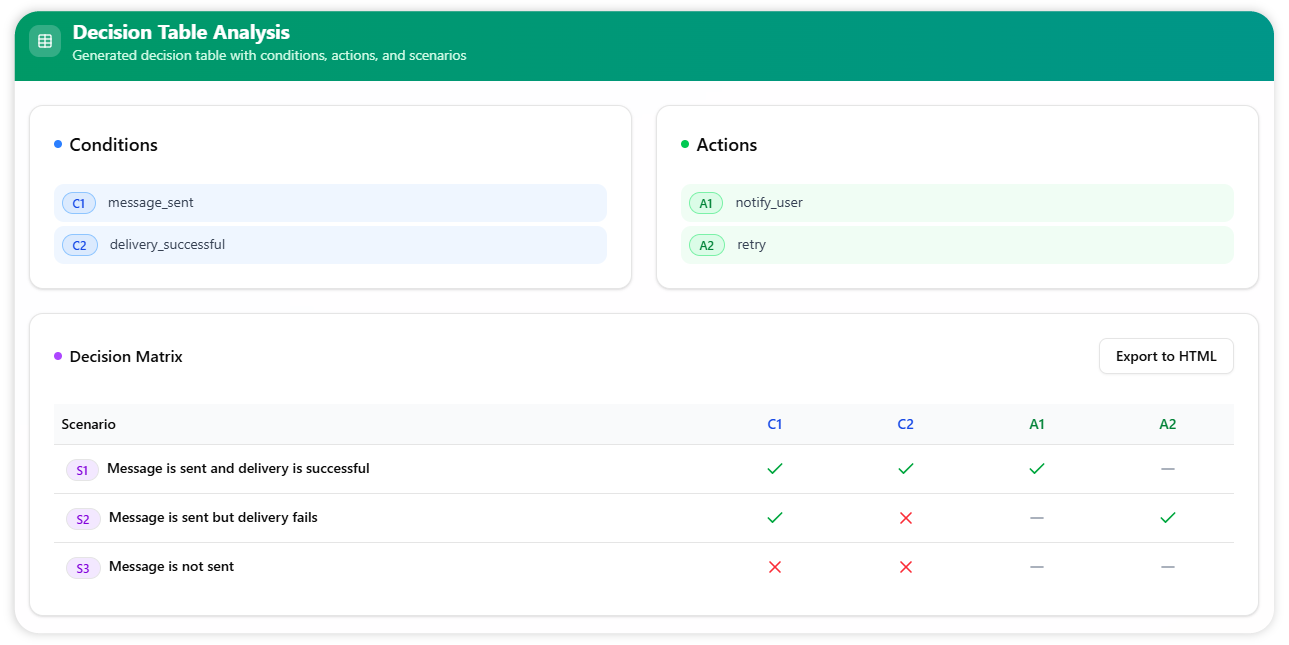
A decision table is a simple but powerful tool for organizing complex business rules and logic. Think of it as a spreadsheet for system design, where you can visually map out every possible scenario...