From Features to Feelings: Crafting a High-Resonance Marketing Campaign A marketing team analyzed customer interview notes to develop a resonant messaging strategy for a new product launch, shifting...
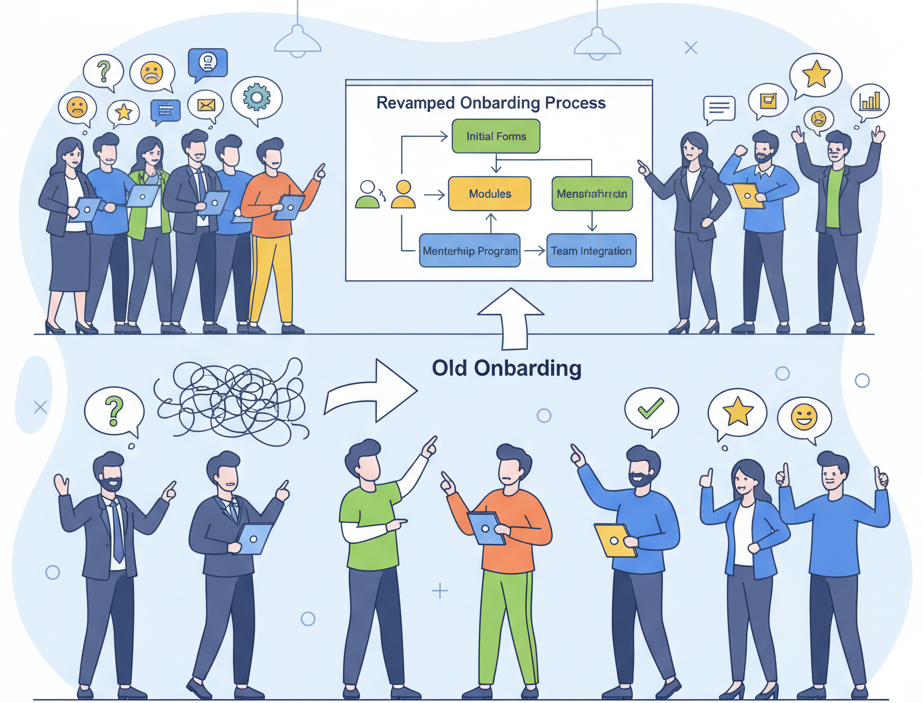
How a Fortune 500 Company Revamped its Onboarding with Employee Feedback An HR department analyzed feedback from 50 new hires to pinpoint systemic flaws in their onboarding process, leading to a...
Finding the Signal in the Noise: Redesigning a Banking App with User-Centric Insights A UX research team analyzed interview transcripts from 15 users to uncover critical pain points, preventing a...
From Overwhelmed to Organized: How a SaaS Startup Defined its Roadmap A fast-growing SaaS startup used the planner to analyze hundreds of pieces of user feedback, transforming a chaotic list of...
Designing software systems often requires trial and error. A team may brainstorm an idea, sketch it out, and then adjust once they realize how it actually looks in practice. Traditional diagramming...
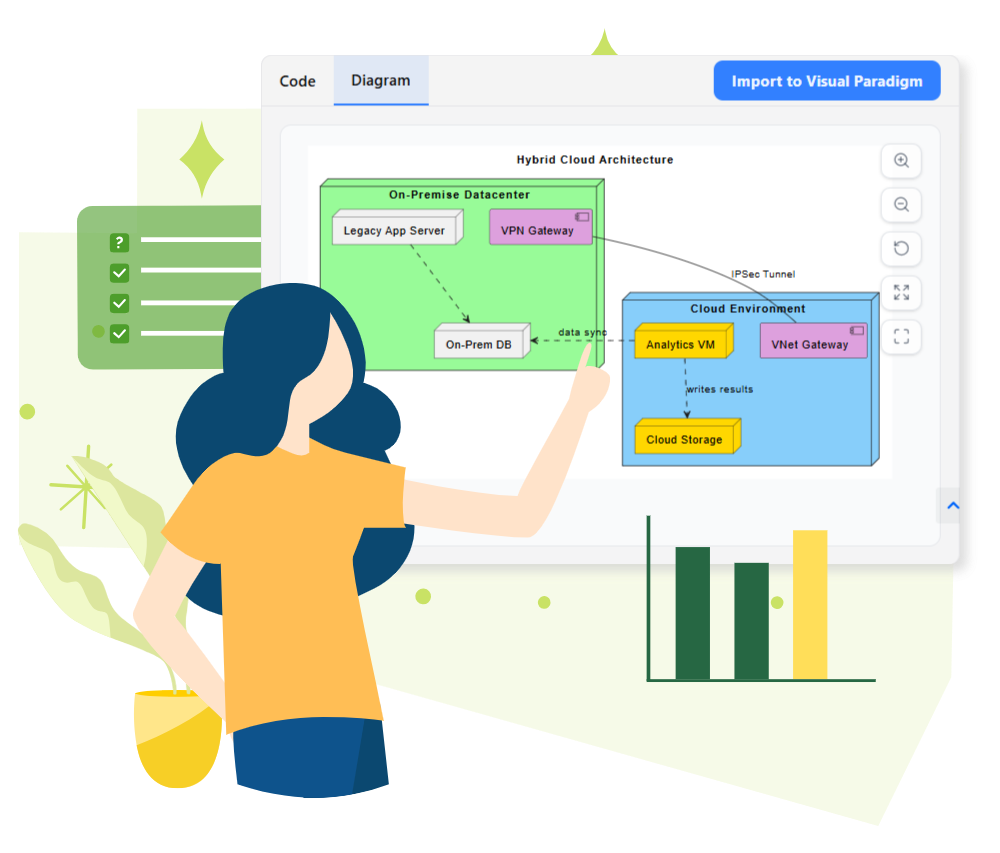
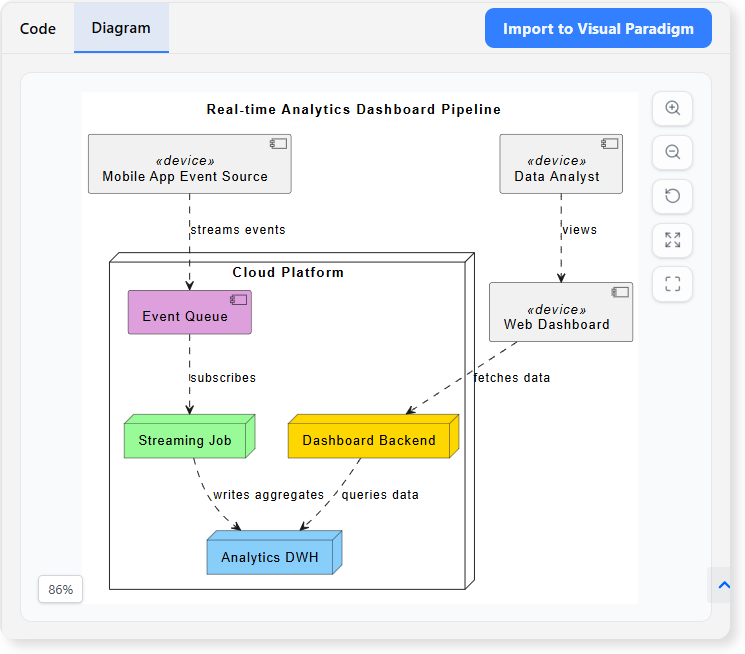
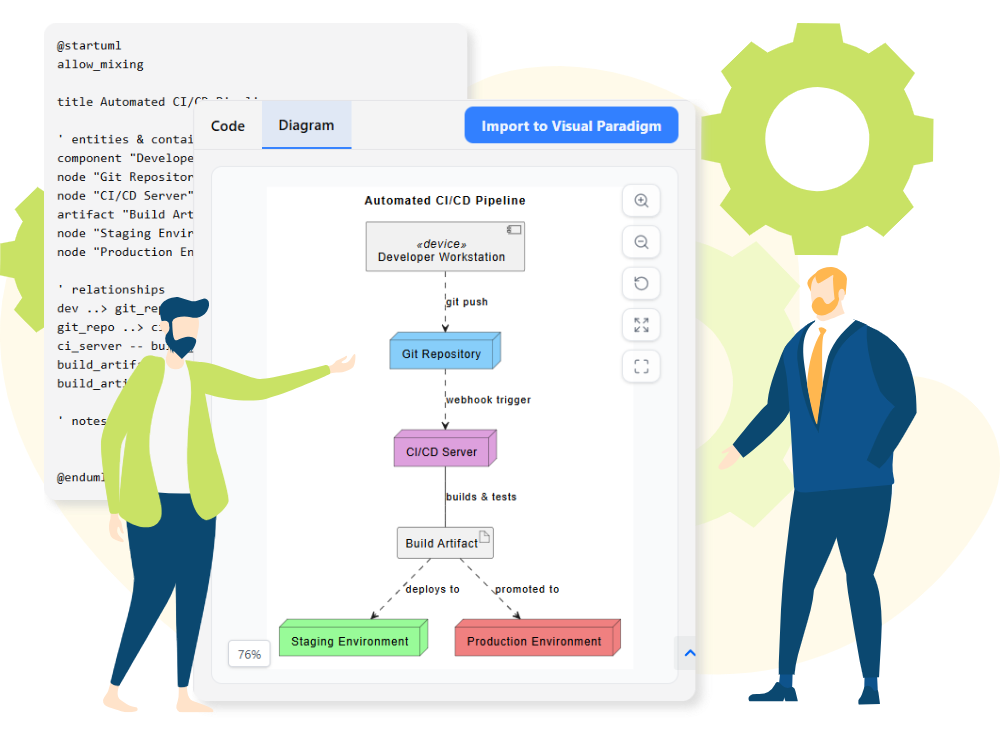
In software architecture, different UML diagrams serve different purposes. Two of the most commonly used are deployment diagrams and component diagrams. While they may look similar at first glance...
Software architecture is complex, and documenting it effectively is critical for long-term success. Teams need diagrams that are not only clear but also easy to maintain, scalable, and consistent...
Clear communication is one of the biggest challenges in software projects. Developers, architects, and business stakeholders often use different terms, making it difficult to align expectations...
Clear communication is at the heart of good software design. While code explains how a system works, diagrams explain how that system fits together at a higher level. One of the most valuable tools...
 Visual Paradigm Desktop |
  Visual Paradigm Online