
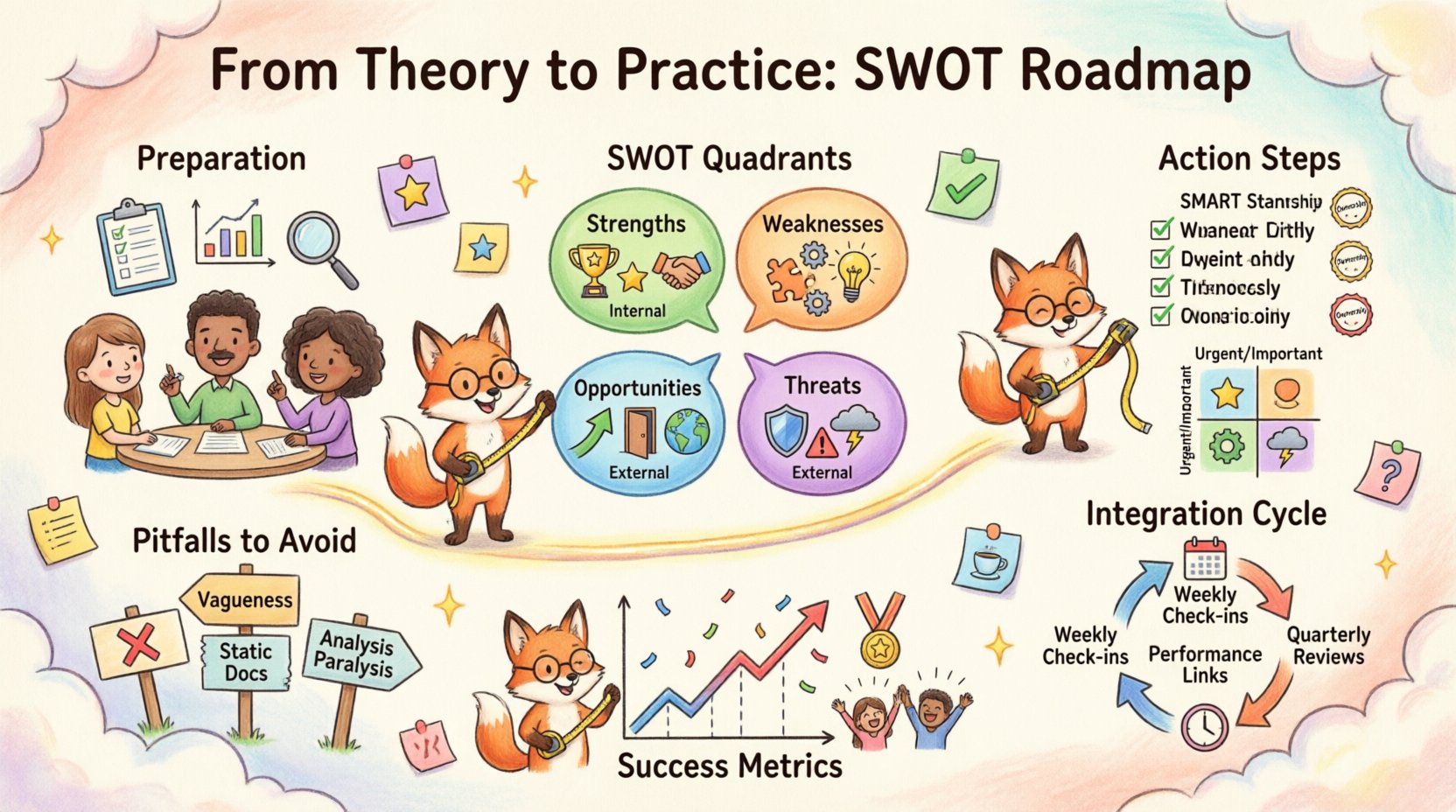
Strategic frameworks often remain confined to annual planning meetings, gathering dust on digital drives. However, the SWOT analysis is a versatile tool that, when applied correctly, can drive tangible improvements in daily business operations. This guide moves beyond the textbook definition to provide a practical methodology for integrating Strengths, Weaknesses, Opportunities, and Threats into your routine workflow. We will explore how to leverage this framework for better decision-making without relying on complex software or abstract theories.
Implementing SWOT effectively requires a shift in mindset. It is not merely about filling out a grid; it is about creating a shared language for organizational health. By grounding your analysis in real data and actionable insights, you transform a static assessment into a dynamic engine for operational efficiency.
Before diving into execution, it is essential to have a precise understanding of the four quadrants. Clarity here prevents confusion later when prioritizing initiatives.
Distinguishing between internal and external factors is critical. A common error is listing a competitor’s new product as a Strength. It is, in fact, a Threat. Keeping this distinction sharp ensures your strategy addresses the right levers of control.
Success in analysis begins before the first brainstorming session. Preparation ensures that the data collected is accurate and representative of the current operational reality.
Do not limit the workshop to senior leadership. Frontline employees often possess the most accurate view of operational weaknesses and daily strengths. Include representatives from sales, operations, customer support, and finance. This diversity prevents blind spots.
SWOT can apply to the entire organization or a specific department. For daily operations, it is often more effective to focus on specific units. For example, analyze the customer support team separately from the marketing department. This granularity allows for targeted action plans.
Opinion-based analysis leads to bias. Support your claims with metrics. Prepare the following documents prior to the session:
When participants see the numbers, the conversation shifts from “I think” to “The data shows.” This fosters a culture of evidence-based decision-making.
The actual analysis session requires facilitation to remain productive. Without structure, discussions can drift into complaints or unfounded optimism.
Use a whiteboard or a shared digital document. Divide the space into four quadrants. Start with Strengths. This builds momentum by focusing on what is working well. Ask specific questions:
This is often the hardest quadrant. Create a safe environment where admitting a weakness is viewed as a step toward improvement, not a failure. Encourage participants to identify bottlenecks.
Look outward. What changes in the environment could benefit you? Consider partnerships, new customer segments, or regulatory shifts.
Do not ignore risks. Threats must be acknowledged to prepare mitigation strategies.
Visualizing the data helps stakeholders see the relationships between factors. Below is a structured representation of how a typical operational SWOT might appear.
| Internal Factors | External Factors |
|---|---|
| Strengths ✓ High employee retention rate ✓ Proprietary workflow methodology |
Opportunities ✓ Expansion into international markets ✓ Growing demand for remote tools |
| Weaknesses ✗ Manual reporting processes ✗ Limited marketing budget |
Threats ✗ Rising raw material costs ✔ New regulatory compliance requirements |
This table serves as a snapshot. It should be reviewed periodically to ensure it reflects current realities.
A SWOT analysis that results in a document that is never acted upon is wasted effort. The value lies in the conversion of insights into operational tasks.
You cannot address every point simultaneously. Use a prioritization matrix based on impact and effort. Focus on high-impact, low-effort items first. These are “quick wins” that build confidence in the process.
For every selected item, define a specific action. Vague goals lead to vague results. Use the SMART criteria:
Every task must have an owner. If everyone is responsible, no one is responsible. Assigning ownership ensures accountability. The owner is responsible for updating the status of the task during team meetings.
To make SWOT a habit, it must be woven into existing rhythms. Do not treat it as a separate event.
During weekly operations meetings, review the status of the action items derived from the SWOT. Ask: “Are we still facing the same threats? Have we solved the identified weaknesses?” This keeps the analysis alive.
Conduct a formal review of the SWOT matrix every quarter. Markets change, and so do internal capabilities. Update the quadrants to reflect new data. This ensures the strategy remains relevant.
Connect the operational goals derived from the SWOT to individual performance metrics. When employees see how their daily work contributes to the strategic framework, engagement increases.
Even with the best intentions, organizations can misstep. Awareness of common errors helps you navigate around them.
How do you know the SWOT implementation was successful? You need metrics that track the effectiveness of the action plans.
Regular measurement creates a feedback loop. It validates the framework and encourages continued use. If the SWOT process is not delivering value, refine the methodology rather than abandoning it.
Embedding strategic analysis into daily operations is a discipline. It requires consistent effort and a commitment to truth. By following this roadmap, you create a culture where strategy is not a distant concept but a practical tool used every day. The goal is not perfection, but continuous improvement. As your organization grows, the SWOT framework will evolve with it, providing a stable foundation for navigating uncertainty.
Start small, focus on data, and ensure every insight leads to an action. This approach turns theoretical knowledge into operational advantage.