
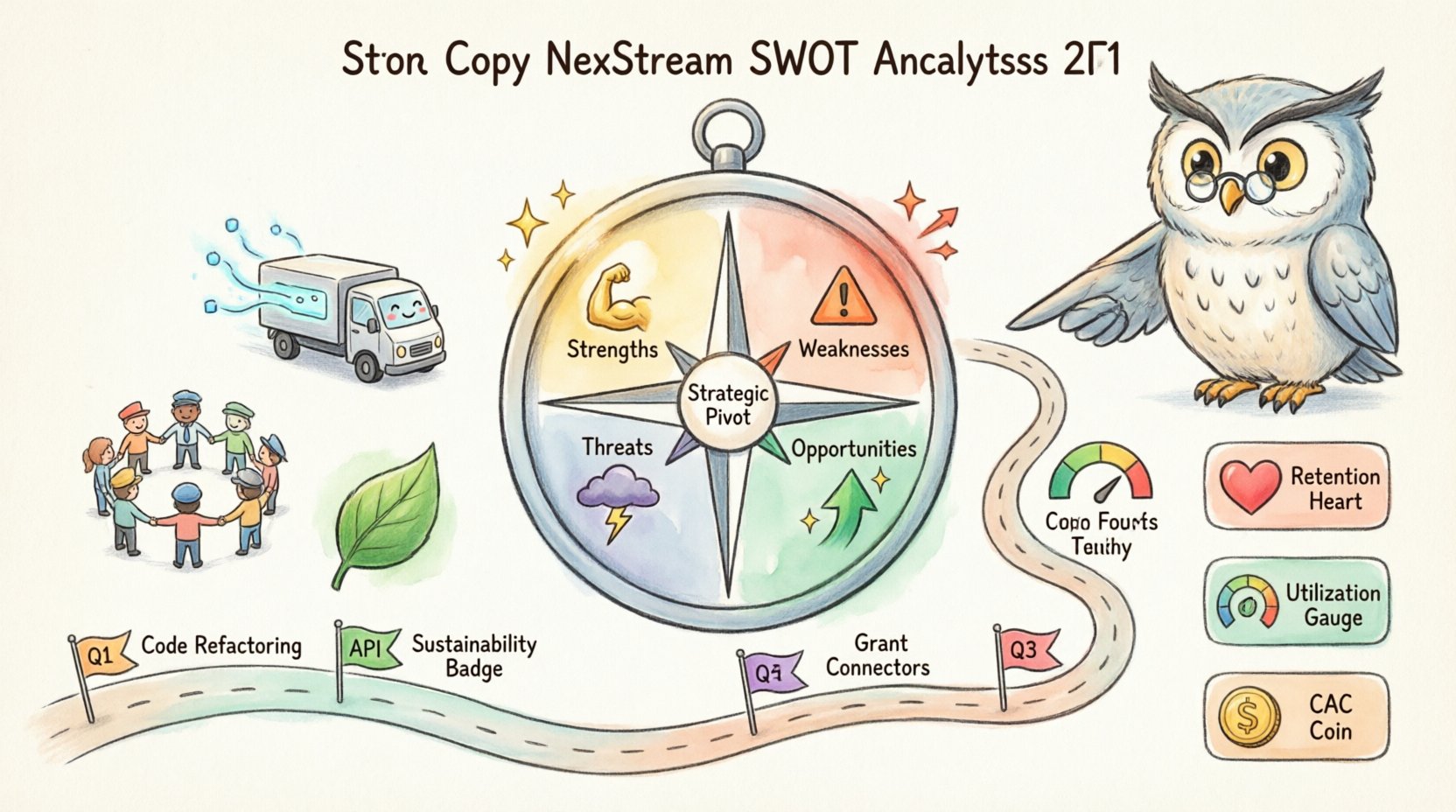
In the fast-paced environment of modern business, the ability to adapt is often more valuable than the initial idea itself. Startups frequently encounter moments where their original vision clashes with market reality. This is where strategic frameworks become indispensable. One of the most enduring and practical tools for this scenario is the SWOT analysis. While often dismissed as a basic exercise, a rigorous application of SWOT can reveal the path to a successful pivot.
This article explores a detailed case study of a fictional logistics technology startup, “NexStream,” that utilized a structured SWOT analysis to navigate a critical market shift. We will break down the process step-by-step, examining how internal capabilities and external pressures informed their strategic decision-making. The goal is to provide a clear, actionable understanding of how to apply this framework without relying on complex software or jargon.
Founded in 2019, NexStream began as a B2B marketplace connecting independent truck drivers with mid-sized retailers. The initial value proposition was simple: reduce empty miles and lower shipping costs. For the first two years, growth was steady. However, by late 2021, the market landscape changed drastically due to fuel price volatility and new regulations regarding carbon emissions.
NexStream realized their existing model was becoming unsustainable. They were burning cash on subsidies to maintain driver rates, which were no longer viable given the margin compression. The leadership team recognized that continuing on the current trajectory would lead to insolvency within 18 months. They needed to pivot, but they could not do so blindly. They required data-driven clarity on where their true advantages lay.
The leadership team gathered for a two-day workshop. They excluded external consultants to ensure the insights remained internal and honest. They divided a large workspace into four quadrants, representing Strengths, Weaknesses, Opportunities, and Threats. The objective was not just to list items, but to quantify their impact.
Strengths are attributes that help an organization achieve its objectives. For NexStream, these were tangible assets they already owned.
Weaknesses are internal limitations that hinder performance. Being honest here was crucial for the pivot.
Opportunities are external chances to grow or improve. These were areas where the market was moving, regardless of NexStream’s current state.
Threats are external elements that could cause trouble for the business.
To make the information digestible, the team created a matrix to cross-reference internal and external factors. This step moved the analysis from a list to a strategic map.
| Internal Factor | External Factor | Strategic Implication |
|---|---|---|
| Strength: Routing Algorithm | Opportunity: Green Logistics | Leverage: Market the algorithm as an emissions reducer. |
| Weakness: Brand Perception | Threat: Large Competitors | Defend: Differentiate via community and service, not just price. |
| Strength: Driver Loyalty | Threat: Driver Shortages | Protect: Retain drivers with equity or bonus structures. |
| Weakness: Tech Debt | Opportunity: ERP Integrations | Fix: Prioritize refactoring to enable API connections. |
With the SWOT matrix complete, the team faced the critical decision: how to pivot? They utilized the TOWS matrix approach (matching factors to create strategies) to derive three core strategic pillars.
Instead of competing on price for generic shipping, NexStream shifted focus to “Sustainable Supply Chain Optimization.” They rebranded their routing algorithm not as a cost-saver, but as an emissions reducer. This aligned with the Opportunity of green logistics and leveraged their Strength in routing technology. They began marketing specifically to retailers with public ESG (Environmental, Social, and Governance) goals.
The Weakness of technological debt became a barrier to the Opportunity of ERP integration. The team decided to pause feature development for new market segments. Resources were redirected to refactoring the core codebase. This was a painful short-term decision but necessary to prevent the Threat of being outpaced by competitors with cleaner architecture.
Facing the Threat of driver shortages, NexStream leaned into their Strength of driver loyalty. They introduced a tiered rewards program that offered priority dispatch to drivers who maintained high ratings. This secured the supply side of the marketplace without requiring massive cash outlays.
A strategy is useless without execution. The team broke the pivot down into a 12-month roadmap, divided into quarterly milestones.
To ensure the pivot was working, the leadership team defined specific Key Performance Indicators (KPIs) that differed from their original model. They moved away from volume-only metrics.
While the NexStream case succeeded, many startups stumble during this phase. Understanding common errors can help you avoid them.
A frequent mistake is placing external market trends inside the Strengths or Weaknesses quadrants. Strengths and Weaknesses must be within your control. Opportunities and Threats are outside your control. Keeping these distinct ensures you know what you can change versus what you must adapt to.
Writing “Good Customer Service” as a strength is insufficient. Was it fast response times? Was it knowledgeable staff? Specificity allows for targeted action. In the NexStream case, they specified “40% driver retention rate,” which is measurable and actionable.
It is easy to spend months analyzing without acting. The SWOT analysis is a tool for decision-making, not a report card. Once the data is gathered, the priority must shift to strategy formulation. NexStream limited their workshop to two days to prevent over-thinking.
Often, teams ignore a Weakness because it is uncomfortable. In NexStream’s case, acknowledging the technological debt was painful but saved them from a system collapse later. Facing hard truths early is better than discovering them during a crisis.
You do not need a massive team or a budget for consultants to perform this exercise. The framework is designed for agility. Here is a simplified approach for smaller teams.
The pivot undertaken by NexStream demonstrates that frameworks like SWOT are not static templates but dynamic tools for sense-making. They provide a language for teams to discuss complex problems without getting lost in details. By grounding their strategy in the reality of their internal capabilities and external environment, they avoided the common startup trap of chasing trends without substance.
Success in business is rarely about having a perfect plan from day one. It is about the ability to read the signals around you and adjust your course with confidence. The SWOT analysis offers a structured way to do just that, ensuring that every pivot is based on evidence rather than intuition alone. As you move forward with your own planning, remember that clarity is the ultimate asset in a chaotic market.